

The 10 Drawbacks to One-Size-Fits-All Thinking in Task Management


You are someone who pays attention to your task management. Like most people, you make many of these micro-commitments each day…to yourself.

You are managing more than ever, feeling accomplished, but also a little concerned. As the load increases, you wonder if others are also in the same boat. Here is some good news…we are all looking for answers, but now and then we look to simple one-size-fits-all answers.

Sidebar: It’s not that one-size-fits-all thinking is wrong. In the beginning, it’s actually quite useful…
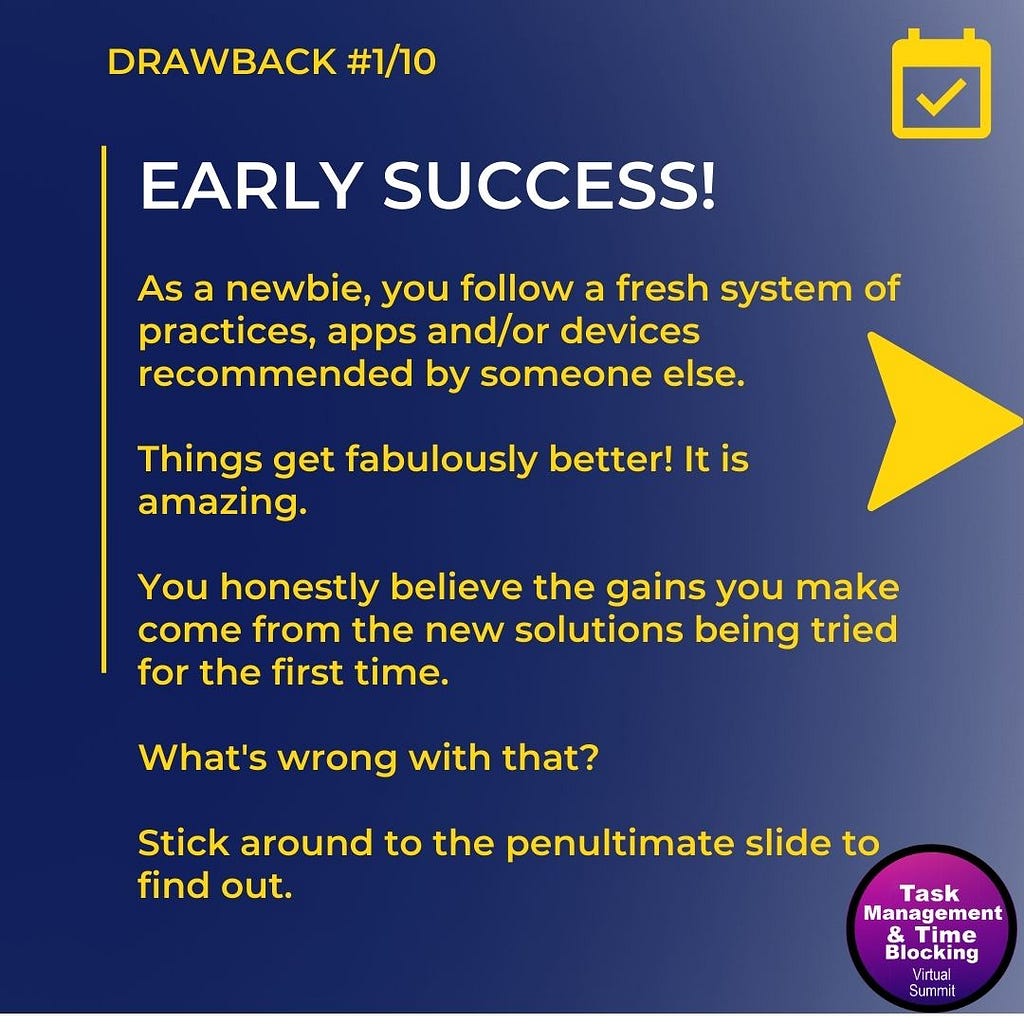
Sidebar: In the penultimate slide, you’ll see why the early success is a drawback.
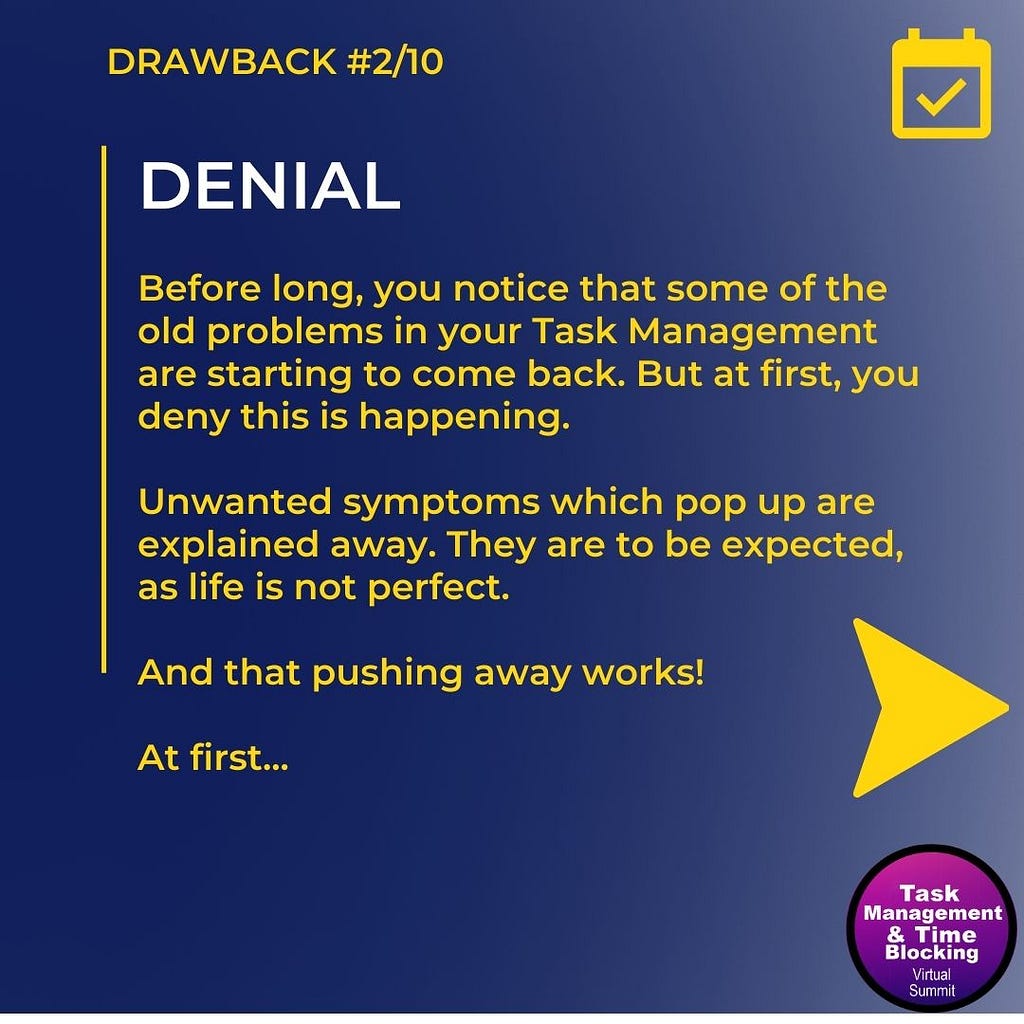
Sidebar: This is only to be expected. As you manage a certain number of tasks effectively, life hands you more. Unless you aggressively shut them down, your task load increases. Eventually it surpasses your capacity…so the “old problems” or “unwanted symptoms” return, or show up in new forms.
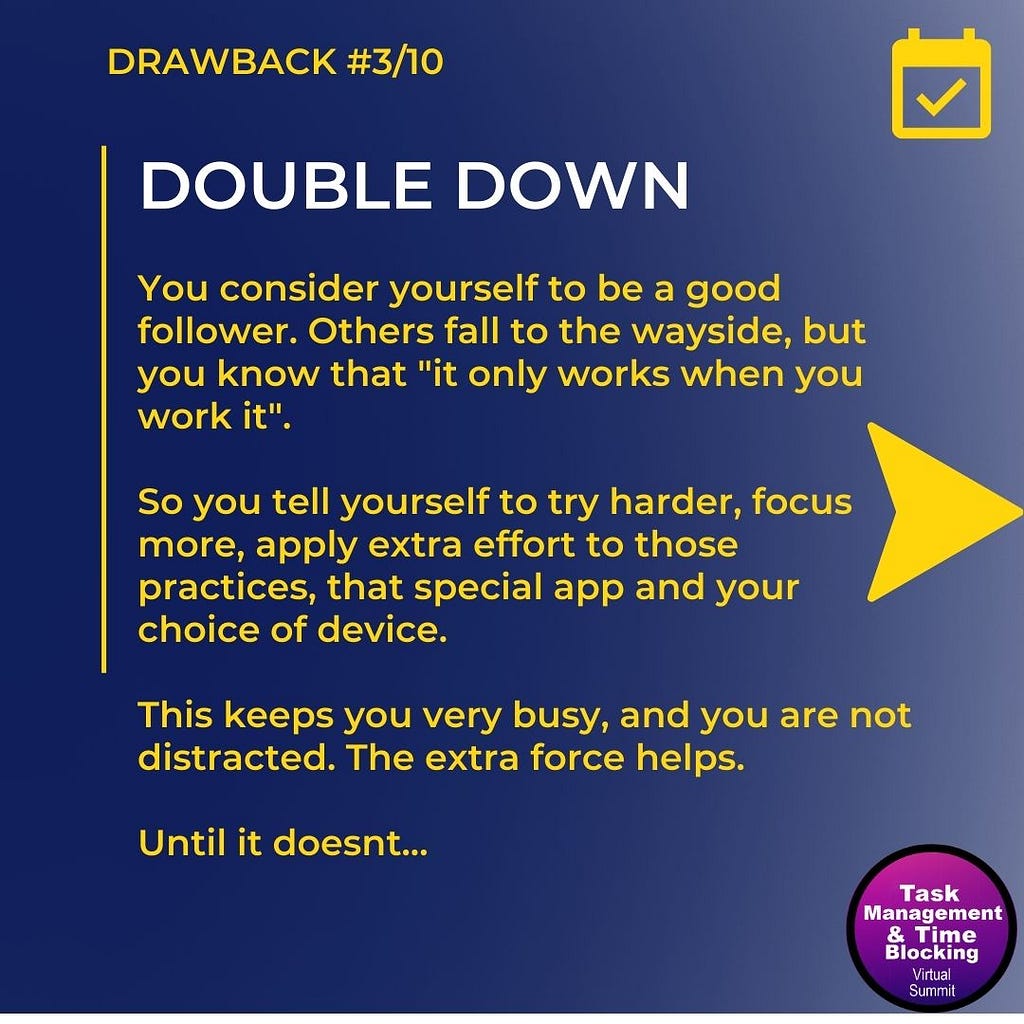
Sidebar: As you near the limits of your capacity, you try to do the same things better.

Sidebar: Along with the practical challenge of completing tasks, you may become entangled. Your ego becomes involved and you don’t want to be shown that your one-size-fits-all solution was incorrect.
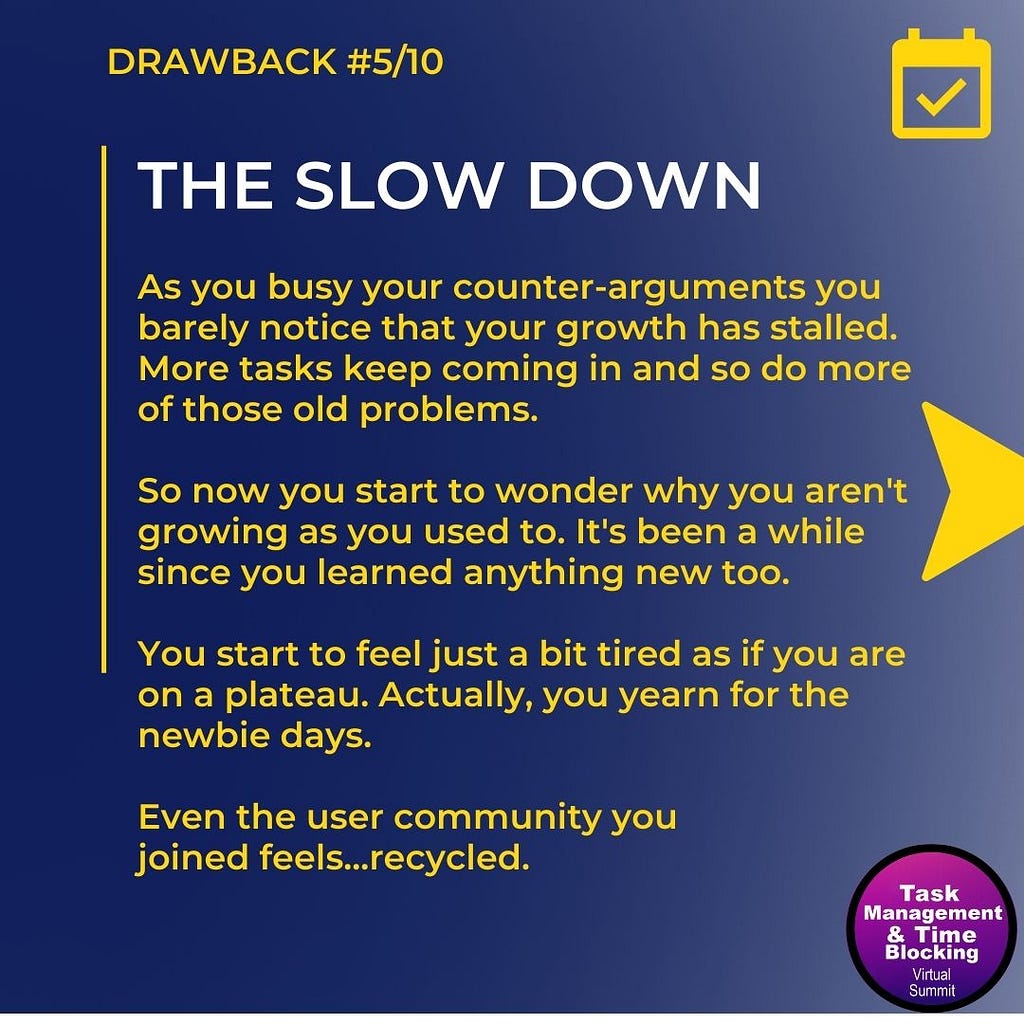
Sidebar: Now you are trying to handle more tasks than your personal system can handle. Your growth stops, and you see more mistakes. Now you accept that there might be a better way.
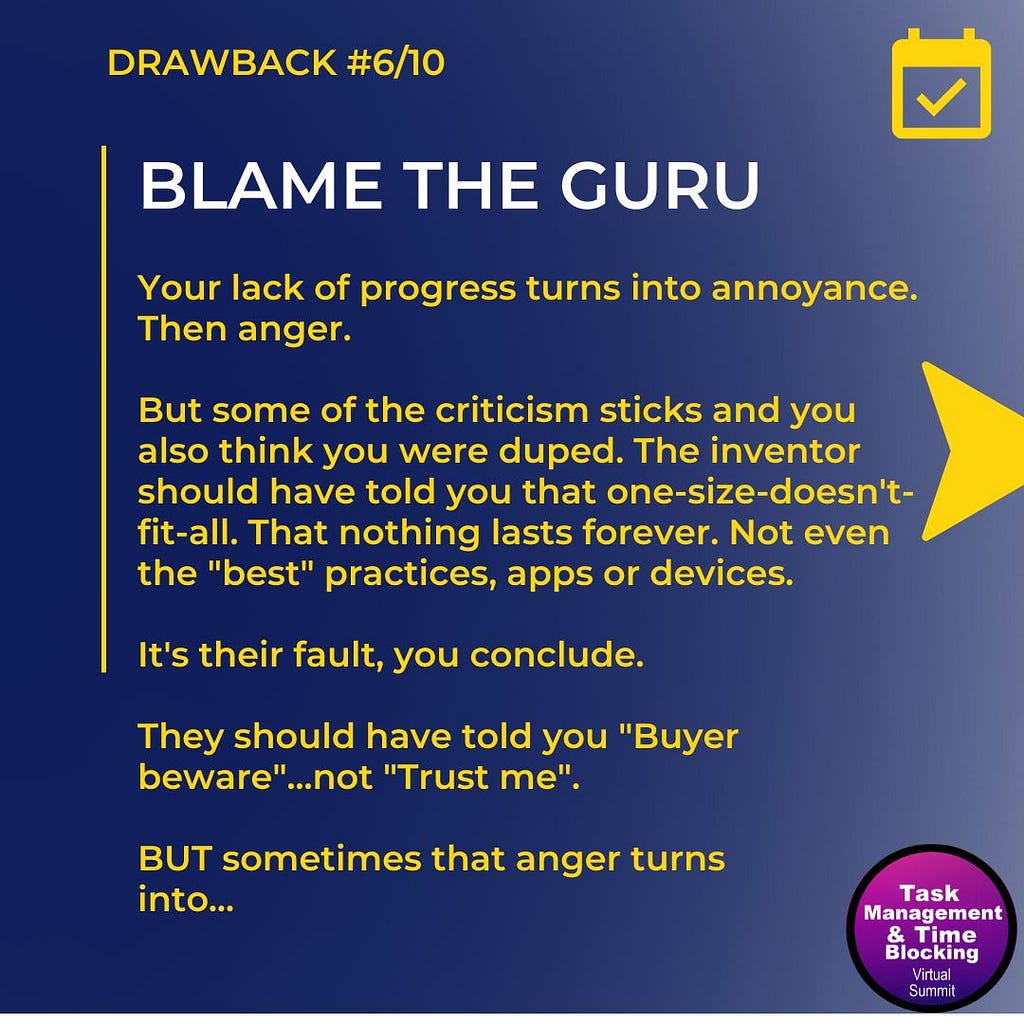
Sidebar: A few become bitter. The fuel turns into complaints via posts, tweets and even entire books.
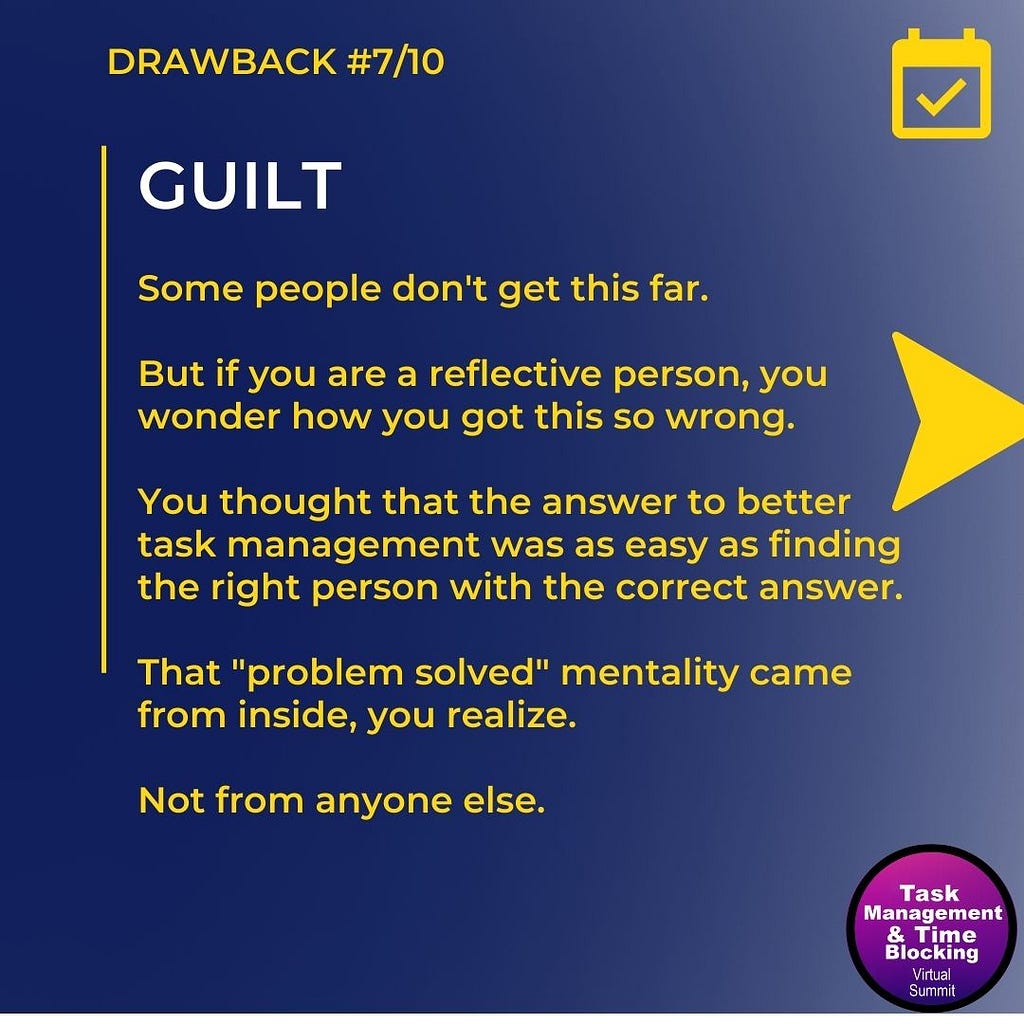
Sidebar: Going “inside” versus “outside” for answers is a major turning point.

Sidebar: Few make it to this transition, but it’s transformative!
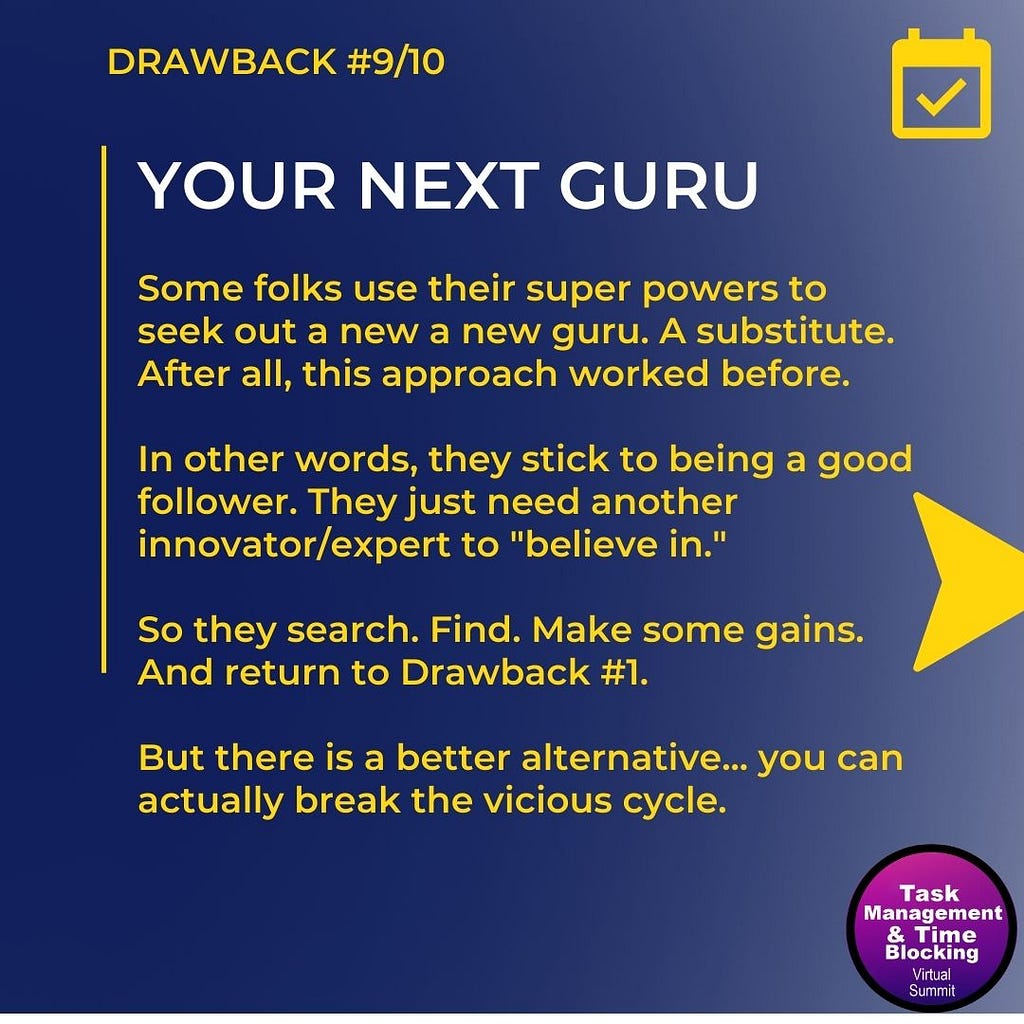
Sidebar: But just before a victory is announced, a final temptation arises. You latch on to another one-size-fits-all solution.

Sidebar: Now you have found your independence. The path is yours and you can choose to shape it. All you need are some skills.
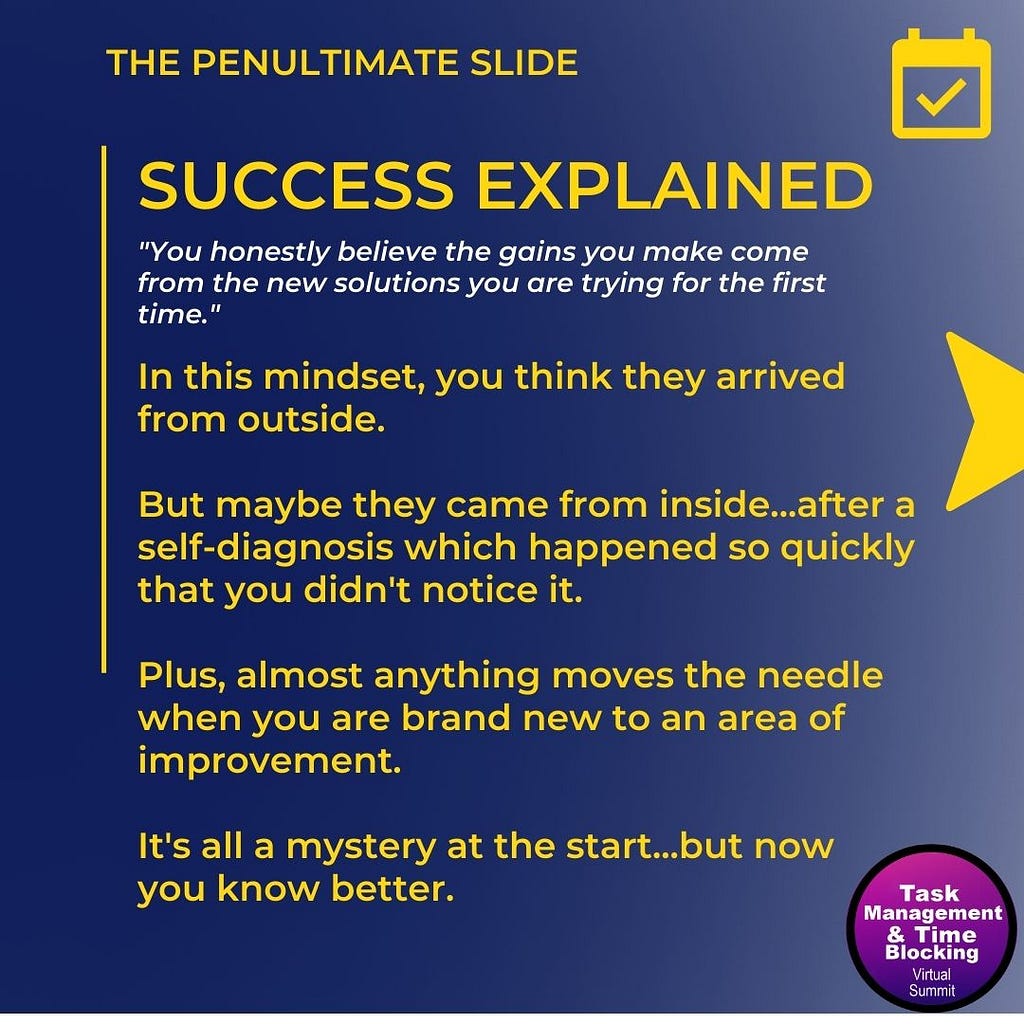
Sidebar: Now that you “know better” the world is your oyster…everyone who develops a system of practices, app or device if your friend.

Our early indications are that this summit will be like no other we have done in prior years. The presenters are stepping up to the challenge in unprecedented ways to have some unique conversations.

If the thought has even crossed your mind that one-size-does-not-fit-all, don’t miss this opportunity to make progress.

Free etickets available — https://timeblockingsummit.info

Summit dates: March 2–4, 2023. 24-hour access to content.


The 10 Drawbacks to One-Size-Fits-All Thinking in Task Management was originally published in 2Time Labs on Medium, where people are continuing the conversation by highlighting and responding to this story.

Ep 14 – Fixing Problems with Time Blocking w Mike Vardy

You’re a time blocker to some degree. This means you put tasks in your calendar…Not just appointments with people which can’t easily be changed, but solo time you commit to doing a particular task.

In other words, you make a promise to yourself that non-one else knows about to do something at a particular time and place.

It’s an easy concept to explain, But…most people who seem to start the practice have a rough time taking it to the level they want. Once they get past the beginner stage, when they are experimenting with a few tasks they want more.

And for a while, they schedule more tasks…and more…and more. Until they have too many and their time blocking becomes a problem. It should be easy, they think, but it’s not.

What are some of the best solutions available?

Tune into this episode to hear from me and my special guest, Mike Vardy, as we solve this challenging problem together.


Henry Cloud – Necessary Endings

Stack Method – Prasanth Nair

Stop doing productive.Start BEING productive. (productivityist.com)

This is a public episode. If you would like to discuss this with other subscribers or get access to bonus episodes, visit 2timelabs.substack.com

Ep 12 – How to Allocate Your Time When Time Blocking with Trevor Lohrbeer

You are someone who time blocks. A quick glance at your calendar would show that you have put some thought into each day’s plan. But what happens when you get to the end of the year and realize that you haven’t accomplished your most important goals?

For example, some gurus at marriagebuilders.com recommend that you spend 15 hours per week in solo time with your spouse. You may block the time in your calendar with a recurring appointment, but realize after a year that you fell far short. Why does this happen? Is it even avoidable?

Tune into this episode to hear from me and my special guest, Trevor Lohrbeer, as we solve this challenging problem together.

This is a public episode. If you would like to discuss this with other subscribers or get access to bonus episodes, visit 2timelabs.substack.com

Ep 9 – Why Aren’t Simple Task Management Solutions Easier to Find?

You are a productivity enthusiast who wants to experience one improvement after another. This kind of progress is sweeet. Like dominoes falling. Or climbing from one level to the next in a challenging video game.

But once you know the problem you want to fix, it’s hard to find simple solutions. The proof? Just check out someone asking for help in an open forum like Reddit.

Someone posts a question, and wants a simple answer they can actually use. What do they get back? A ton of answers. There is no way to make sense of the flood of opinions…some of them openly contradict each other.

Heck, I came across a big one the other day reading Getting Things Done. On p40 and 142 of the 2001 book, David Allen strictly prohibits time blocking. But on page 87 he says Quote “I recommend that you create a block of time to initiate this process…”

It ought to be easier to find simple solutions than this!

Well…our job in this episode is to ask the question “Why aren’t simple task management solutions easier to find?”

Visit www.replytofrancis.info to leave us some feedback or ask a question via text or voicenote communication

This episode is available on our YouTube channel. https://youtu.be/VzCBXTxO9ek

https://timeblockingsummit.info to register for the next summit

https://mightytaskers.ScheduleU.org to join our community

https://www.patreon.com/francis_at_2timelabs to support this podcast with a donation.

Remember to subscribe to this podcast via Apple, Google or your favorite podcast player.

Download a rough transcript of this episode. https://timeblockingsummit.info/wp-content/uploads/sites/9/2022/04/episode-9-Francis-Wade-Not-Simple_otter_ai.docx

Francis Wade is the host of the Task Management & Time Blocking Virtual Summit and the author of Perfect Time-Based Productivity. Connect with him on Linkedin or send a message here. www.replytofrancis.info

The post Ep 9 – Why Aren’t Simple Task Management Solutions Easier to Find? first appeared on Task Management and Time Blocking Summit 2023.

Part 16 — Psychological Objects and Tasks


Part 16 — Psychological Objects and Tasks

Why You Must Separate Psychological Objects from their Physical and Digital Counterparts in Your Task Management

Problem

You want to manipulate future, incomplete tasks effectively, hoping to improve the way you manage them so you can become more effective. However, they seem to have a life of their own!

Even though you have set up a system of lists, schedules, reminders, apps, etc. to pin them down, they seem ready to slip away at a moment’s notice. Tasks are unlike physical objects like desks and chairs, or digital objects like documents or email messages. Instead, they are invisible and intangible.

Left untended, they have the unfortunate ability to disappear from view, never to be recalled ever again. Pus, they fade behind our other commitments, only to reappear suddenly when it’s too late, long after a problem has arisen.

Our problem is that we don’t treat them as if they have a special, unique nature. While we know that they are born when we make a specific commitment, and die when a task is completed or intentionally voided, what should happen in between remains a mystery. Even academic researchers barely understand!

Why Is This Important?

Someone who understands the distinction between psychological objects and physical or digital objects can manage each of them according to their unique properties. Given the fact that your task management system probably includes all three, this knowledge can help you make better quality improvements.

What’s the Link to the Rapid Assessment Program (RAP)?

In the RAP you see how it’s possible to make improvements which are in line with the ephemeral nature of tasks i.e. psychological objects. You are more likely to be effective with this insight, especially as you move forward to implement a plan of Pareto Improvements.

Find out more about the MyTimeDesign Rapid Assessment Program in this webinar.


Part 16 — Psychological Objects and Tasks was originally published in 2Time Labs on Medium, where people are continuing the conversation by highlighting and responding to this story.

Part 15 —Why You’ll Need Systemic Task Management

Why You Must Focus on Your Whole Task Management System Rather than its Parts

Problem

When you want to find a way to improve the way you manage your tasks, it’s tempting to do a Google search or visit a Q&A forum like Reddit or Quora. You’re looking for something important — probably a way to retain your peace of mind while accomplishing more.

But the answers you find at first probably look like small bits and pieces of something much larger. For example, someone who tried a particular practice or started using a new app may have made some gains. If task management were simple, this would be all the advice you’d need.

Unfortunately, that’s not the case. Our self-made systems are combinations of practices and apps we engage in each day. However, these elements are intertwined.

As such, like any complex system, you can’t simply focus on improving a single piece at the exclusion of the bigger picture. You may, in fact, make things worse if you tweak one aspect, but ignore the ripple effect which is created.

Why Is This Important?

It’s only natural to become frustrated when you attempt to make an improvement that only makes things worse. Some give up at this point, but they don’t need to.

Instead, they need to educate themselves about the inner workings of the task management system they use each day. This knowledge can lead them to make Pareto Improvements which have an outsized effect.

What’s the Link to the Rapid Assessment Program (RAP)?

The best way to learn how your task management system works isn’t to listen to a lecture. Instead, the RAP gives you self-diagnostic tools that help you craft a plan of improvement based on the fact that you need to take a systemic approach.

Find out more about the MyTimeDesign Rapid Assessment Program in this webinar.


Part 15 —Why You’ll Need Systemic Task Management was originally published in 2Time Labs on Medium, where people are continuing the conversation by highlighting and responding to this story.

Part 14 — The Law of Diminishing Returns in Task Management


Part 14 — The Law of Diminishing Returns in Task Management

Why it becomes harder to make improvements as your task volume increases

Problem

When you only had a small list of tasks, it was easy to make improvements. You took your productivity in this area seriously and made some good changes, expecting to continue in the same vein indefinitely.

However, as you moved to the next level, and the next, it seemed harder to keep up the pace of improvements. In fact, it may have felt like you were stalling.

Why did this occur?

To put it simply, you benefited from “beginner’s luck”. When you bring sound practices to a self-taught system of any kind, the effect is generally positive.

However, the reason it becomes harder to make the same progress has everything to do with the easy changes you have already made. Now, you just cannot grow as quickly, and you must shift your methods.

Why Is This Important?

The fact that you are managing more tasks is a sign of success, a fact to be celebrated. Unfortunately, you now need to accept that it will take more knowledge and effort to continue to make changes. As such, your expectations need to shift as well. To maintain the thrill of continuous learning, you must now make an investment in yourself.

You need to add to your knowledge, skills and awareness, enhancing your ability to self-diagnose your task management.

Fail to do so and you’ll get stuck. The Law of Diminishing Returns may lead you to quit.

What’s the Link to the Rapid Assessment Program (RAP)?

Within the RAP, you’ll learn the art of making progressively more sophisticated self-assessments. This takes patience, and a trained eye. But you’ll be more satisfied bythe end as deeper improvements become accessible.

Find out more about the MyTimeDesign Rapid Assessment Program in this webinar.


Part 14 — The Law of Diminishing Returns in Task Management was originally published in 2Time Labs on Medium, where people are continuing the conversation by highlighting and responding to this story.

Part 13 — The Switch Away from Persisting with Old Lessons


Part 13 — The Switch Away from Persisting with Old Lessons

Why, in task management, you’ll need to switch from approaches that worked for you in the past

Problem

As a productivity enthusiast, you have made a number of positive changes to your task management. These were gratifying, and you want more of them to retain that thrill of learning. But have you reached the point where it’s difficult to make noticeable improvements? If so, it may be time to give up on the approaches that have worked so well up until now.

Most of the learning for beginners in task management tends to be easy to follow. It’s usually prescriptive, made up of precisely detailed behavioral rules compiled by a thoughtful guru. They make a difference quickly, in what some call “beginner’s luck”.

The temptation is to keep doing what you have always done. To follow the same advice that gave you the early gains.

However, you may find that it becomes more difficult to continue your personal growth. Why? The easy fixes have all been made. The next round won’t yield the same gains, and they are harder to uncover. At this point there are a few strategies you can pursue.

  • A few people double down and try harder to implement their initial lessons. For example, some folks who picked up Getting Things Done by David Allen are urged to double down on his advice by others who are more experienced. They explain where the new follower isn’t actually implementing his advice correctly, with predictable results.
  • Some look for a different prescription from a new guru. They still want to be told what to do, just by someone else.
  • A handful make the switch. Sometimes without knowing, they follow the example of gurus who craft their own improvements, becoming self-coaches in their own right.

While it’s clear that the first approach doesn’t work, some find it difficult to give up their success formula. After all, most gurus don’t advise their followers to look for signs that it’s time to move on. They don’t talk about the switch — it’s no good for business.

Why Is This Important?

If you’re like most people, you stick to methods of learning that worked in the past, trusting them to deliver in the future. These tend to be pedagogical rather than androgogical lessons, meant for novices rather than experienced learners.

Now that you have some task management knowledge, it’s better to jump straight to a heutagogical approach, in which you drive your own learning.

What’s the Link to the Rapid Assessment Program (RAP)?

The RAP is designed for those who have already made the mental switch, but need tools to conduct their first systematic self-diagnosis of their task management methods. With pre-made tools and concepts, you can discern slight nuances which enable you to make Pareto Improvements. Now you can plan for the future.

Find out more about the MyTimeDesign Rapid Assessment Program in this webinar.


Part 13 — The Switch Away from Persisting with Old Lessons was originally published in 2Time Labs on Medium, where people are continuing the conversation by highlighting and responding to this story.
Part 12 — Coping with Your Hunger for Capacity


Part 12 — Coping with Your Hunger for Capacity

Why productivity enthusiast aren’t satisfied “managing just so many tasks but no more”.

Problem

You’re a top performer who is a lifelong learner; someone who sees a future of personal growth. But you seem to be like a hamster on a treadmill. The last improvement you made to your task management wasn’t enough and you’re not sure why. Neither was the one before. Why don’t your improvements endure forever? Why do you care so much about getting better in this area when the average person doesn’t?

In a prior article (#8) in this series, we established that there’s always a limit to your ability to manage tasks effectively. In other words, even if you are insanely productive, an invisible cap exists. Whenever you attempt to add more tasks beyond the limit, you instantly experience unwanted symptoms. It’s as if there’s always a camel’s back waiting to be broken.

You may be lured into the belief that human beings should find and settle down to their current level of task performance, and forget about further improvements. But this doesn’t match my observation of trainees and coachees. They always want more. And maybe it applies to you, given that you have read this far.

But why do you keep tempting fate by adding one more straw to your camel’s back? And then another? Why does the realization that the camel’s back has gotten a bit stronger make you look forward to increasing the load?

Is this bad? Should you stop?

Well…join the club. My research shows you and other productivity enthusiasts have an unquenchable appetite for more tasks. Consequently, as soon as you find a way to increase your capacity, you can’t help yourself…you add more tasks.

If you’re lucky, you discover that your appetite grows more slowly than your capacity increases. Most experience the opposite. Why? Too many productivity enthusiasts are high-performers or Type A personalities.

Why is this important?

Understanding this innate tendency can be freeing. It’s just part of your nature…a good thing.

As you drive for amazing results, it’s natural to wish to increase your capacity to manage tasks.

So…you can relax and commit to a career of steady improvements. You can also know that unwanted symptoms are not a sign of failure, but a signal that alerts you to the need to increase capacity.

What’s the Link to the Rapid Assessment Program?

Without a systematic way to make improvements, this continuous demand for improvement sometimes becomes stressful. In the worse case, you could feel trapped in a dead-end. However, the Rapid Assessment Program is one way to figure out the best improvements to make at any point in time.

This means you can accept your true nature; your tendency to increase task volume so that it nears the upper limits. And you can embrace the fact that continuous improvements are the price you pay for being a driven human being. This is a game you have unwittingly played for years. Making it conscious should make you a better player.

Find out more about the MyTimeDesign Rapid Assessment Program in this webinar.


Part 12 — Coping with Your Hunger for Capacity was originally published in 2Time Labs on Medium, where people are continuing the conversation by highlighting and responding to this story.